AI for Clinical Trials and Clinical Drug Development
Use AI for clinical trials to improve trial design, biomarker-led patient stratification, recruitment, monitoring and clinical data workflows while keeping expert review and traceability in place.
AI for clinical trials across the development workflow
Clinical development programs bring together protocol decisions, biomarker evidence, patient-level data, operational monitoring and regulatory documentation. Ardigen’s clinical development services apply AI, analytics and fit-for-purpose drug development software to clinical trial optimization, with the scope adapted to the available data, trial phase and review requirements.
AI-powered solutions for clinical drug development
Advanced biomarker discovery
Identify and assess predictive or prognostic biomarker candidates from multimodal clinical and omics data to support biomarker-driven trial design, patient stratification and response analysis.
Intelligent trial design and protocol generation
Structure evidence for protocol development, scenario review and document drafting while clinical and regulatory experts retain approval responsibility.
Optimized patient recruitment & eligibility
Analyze approved clinical and patient data against protocol criteria to support feasibility, screening and cohort-planning workflows.
Real-time clinical trial monitoring
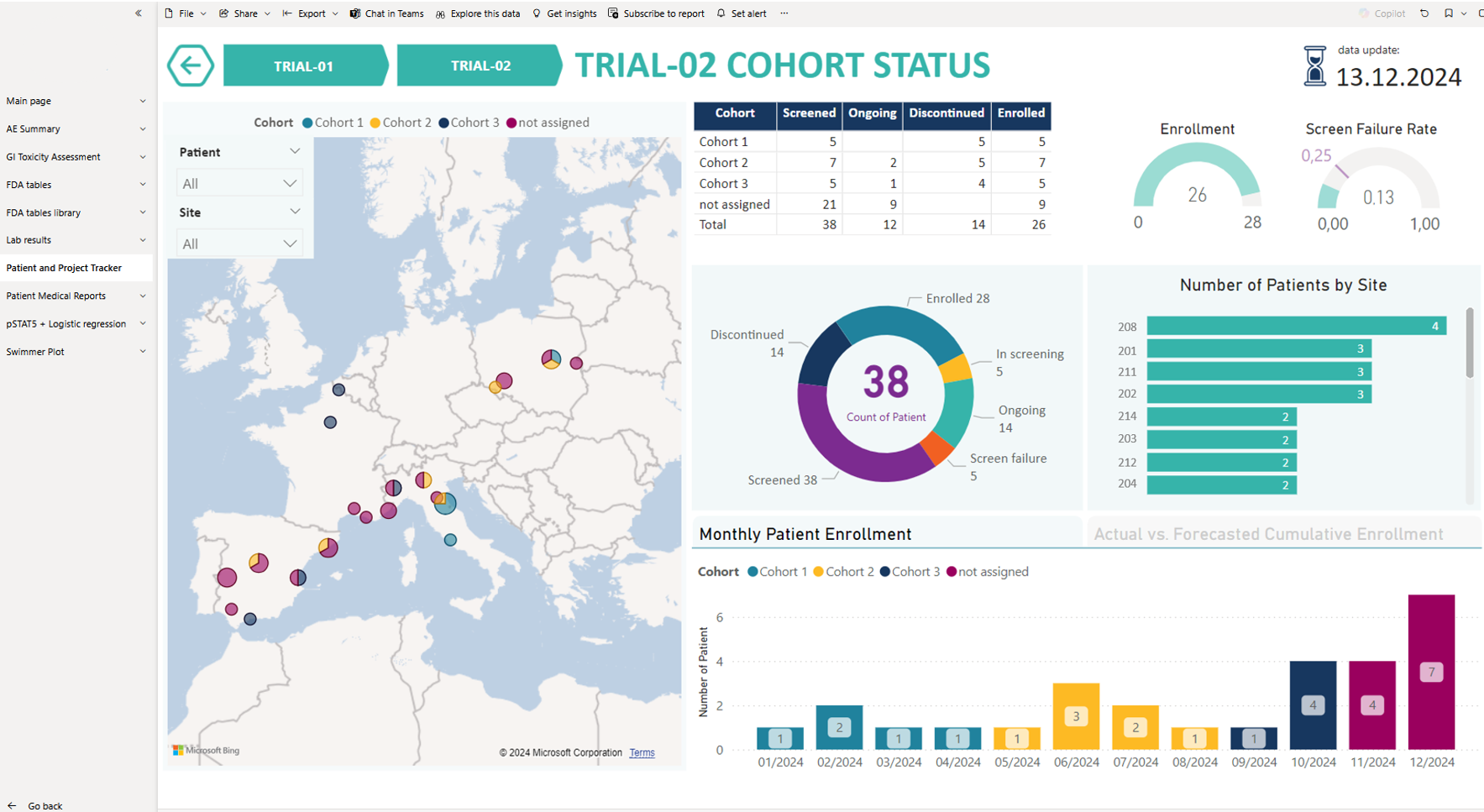
Integrate incoming data to improve cohort visibility, identify anomalies and support timely operational review when the source systems and update cadence allow it.
.
Enhanced clinical data analysis
Use clinical data analytics across multimodal datasets to explore treatment response, safety signals and patient subgroups with documented inputs and reviewable outputs.
Regulatory submission automation
Support structured authoring and evidence assembly with traceable source material, validation steps and human review. Regulatory compliance remains the responsibility of the sponsor and its qualified experts.
Advanced
biomarker profiling
Biomarker evidence can connect preclinical hypotheses with clinical outcomes. Ardigen combines human data, multiomics and AI-supported analysis to help teams define patient subgroups, assess treatment-response patterns and plan validation. The exact endpoint and validation route depend on the clinical question and study design.
Multimodality
of data:
and public datasets
Platform for monitoring clinical trials
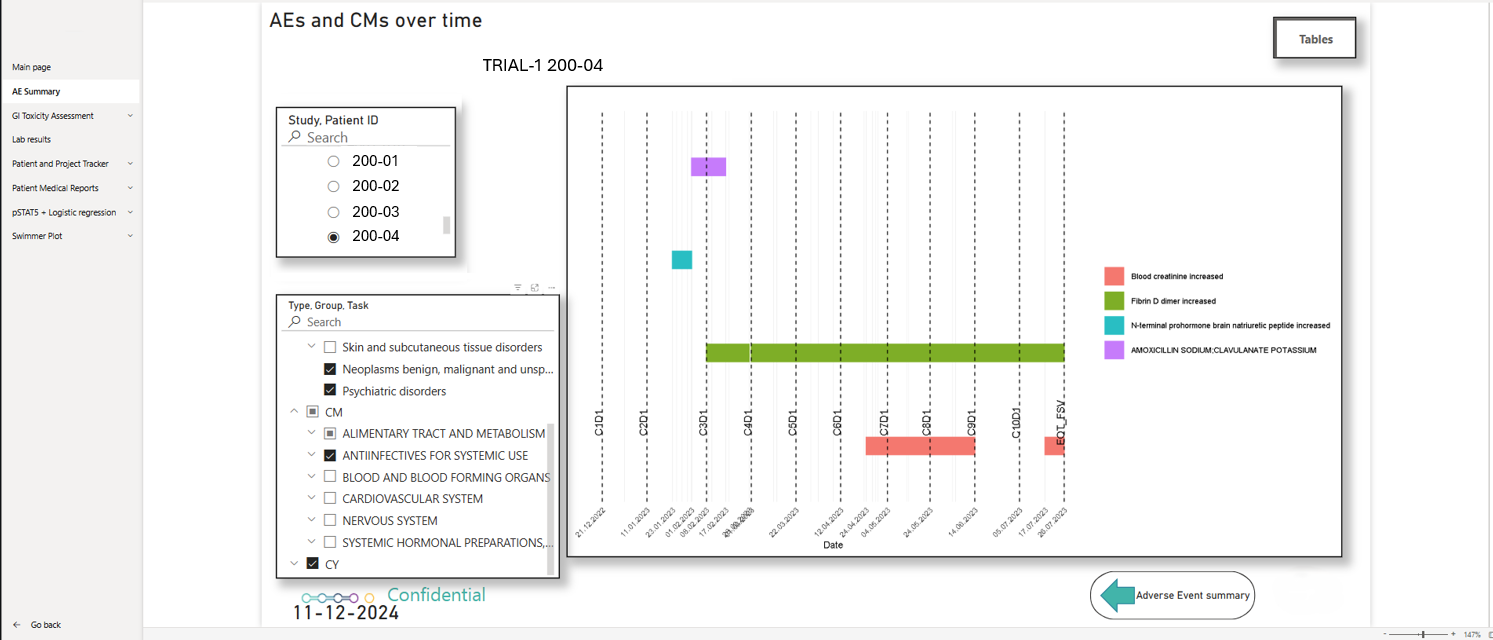
A governed clinical data and analytics layer can provide a unified view of trial progress for medical, operational and management teams. Ardigen can design or integrate this layer around the program’s source systems, access controls and reporting needs.
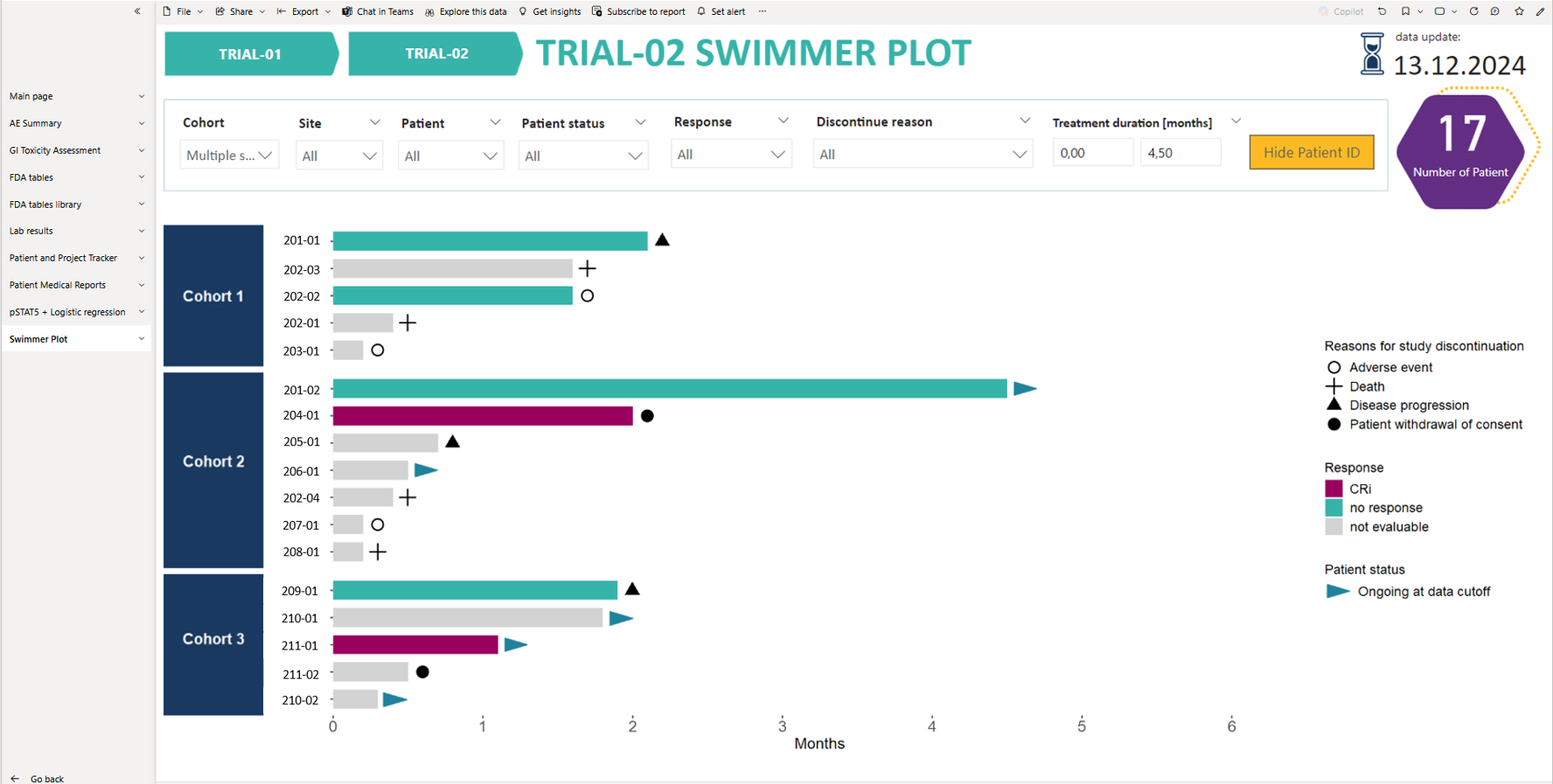
Use clear visualizations, including swimmer plots where appropriate, to review program and cohort progress.
Comprehensive AI service
Preclinical & early - stage optimization
- Biomarker-driven patient-selection strategy
- AI-supported protocol design and scenario analysis
- In silico analyses where the scientific evidence and intended use support them
Trial execution
& data analysis
- Recruitment, eligibility and cohort analytics
- Clinical monitoring and safety-signal review workflows
- Multimodal biomarker profiling for precision-medicine programs
Regulatory & market access support
- Structured drafting and evidence-assembly workflows
- Analysis supporting adaptive trial decisions where the protocol permits
- Predictive modeling for treatment-response and efficacy questions
Explore our clinical development expertise
See the impact
Case studies
Frequently Asked Questions
How do AI-driven solutions streamline clinical trial efficiency?
AI can support protocol review, site and cohort analysis, patient stratification, data-quality checks and monitoring. The benefit depends on the available data, integration with clinical systems and a defined human-review process. Ardigen scopes these elements around the trial decision rather than applying one tool across every stage.
What are the benefits of AI in clinical trials?
AI for clinical trials can help teams analyze larger and more varied datasets, identify patterns relevant to patient selection, automate repeatable data tasks and surface operational or safety signals for review. It supports clinical decision-making; it does not replace medical, statistical or regulatory accountability.
What is the role of AI in advanced biomarker discovery for clinical trials?
AI can combine clinical, omics, imaging and other data to identify predictive or prognostic biomarker candidates and assess patient subgroups. Candidate biomarkers still require appropriate analytical and clinical validation before they are used for trial decisions.
How does AI optimize patient recruitment and eligibility in clinical studies?
Models and rules can compare approved patient data with protocol criteria, support feasibility analysis and identify potential screening bottlenecks. Final eligibility and enrollment decisions remain with the clinical team and follow the protocol and applicable privacy requirements.
Can AI provide real-time clinical trial monitoring and analytics?
It can support near-real-time monitoring when source data is available at the required cadence and the integration has been validated. Dashboards and alerts can help teams review cohort progress, anomalies, protocol deviations and safety information without changing the sponsor’s oversight responsibilities.
How can AI automate regulatory submissions for drug development?
AI can assist with structuring source data, retrieving approved evidence, drafting defined document sections and checking consistency. Every output requires qualified review, validation and approval under the sponsor’s document-control and regulatory processes.
See also:
Contact
Ready to improve your clinical development workflow?
Tell us which clinical decision, dataset or operational process is limiting your program. We will review the scope and propose an appropriate next step.
Newsletter
Become an insider
Be the first to know about Ardigen’s latest news and get access to our publications, webinars and more!