The Challenge
A mid-sized pharmaceutical company sought to accelerate the hit-to-lead optimization process by identifying the most promising chemical structures with high activity while ensuring synthetic feasibility.
Our Approach
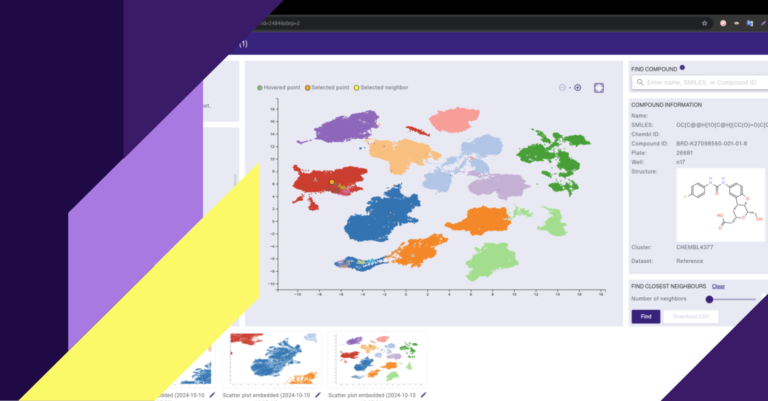
We applied a cheminformatics-driven strategy, leveraging clustering and Maximum Common Substructure (MCS) search to refine the molecular representation model. Using our state-of-the-art COPTIC framework, we employed reinforcement learning to generate optimized compound structures with desired properties.

Results
- Generated 6,656 compounds, of which 5,857 were unique
- 2,622 compounds exhibited an EC50 <10nM, indicating high potency
- Developed a predictive model with >90% accuracy
- Ensured synthetic accessibility and docking feasibility of the proposed compounds
By integrating AI-driven cheminformatics, we enhanced hit-to-lead workflows, significantly reducing the time needed for molecular optimization.
Expert Contribution
The application of reinforcement learning in this case, a key area of expertise for Jan Majta, PhD, Ardigen’s Director of AI Solutions, ensures our AI-driven cheminformatics strategies are constantly innovating the hit-to-lead optimization process.
Further Reading from Ardigen’s Knowledge Hub
Explore more insights into AI for small molecules and drug discovery: