UX Design for AI in Bioinformatics Tools
The invisible bridge: How UX design can support AI success in bioinformatics?
Summary: UX design for AI in bioinformatics is increasingly critical as model outputs grow more complex and harder to interpret within everyday scientific workflows. Interfaces that support transparency and structured exploration help researchers assess reliability, understand the reasoning behind predictions, and communicate results across teams. By translating explainability into practical design elements – such as intuitive filtering, clear data organization, and confidence visualization – UX strengthens trust, improves adoption, and supports effective collaboration between bioinformaticians, biologists, and clinicians.
Artificial intelligence in bioinformatics promises a revolution. Models learn from billions of DNA sequences, analyze phenotypes at population scale, and detect subtle patterns in data that would be completely invisible to the human eye. This gives us the potential to design drugs faster, diagnose more accurately, and understand biology more deeply than ever before.
Amidst this dynamic progress, it’s worth pausing to ask a question: are our advanced algorithms truly helping scientists who use them daily? Can they harness their full potential, understanding how they work and the confidence level of their predictions? These are the questions that guide our work in UX design. Even the most sophisticated model becomes of little use if its users cannot fully understand the results, assess their reliability, and efficiently apply them to established processes. UX Design then becomes the invisible bridge connecting computational power with human expertise.
In the world of e-commerce, UX often strives for maximum simplicity. In science, the goal is different. Here, complexity is not a problem to be eliminated, but a treasure to be skillfully made accessible. UX in bioinformatics can give this complexity form, logic, and structure. We can think of it as a translator and guide, helping researchers navigate the ocean of data.

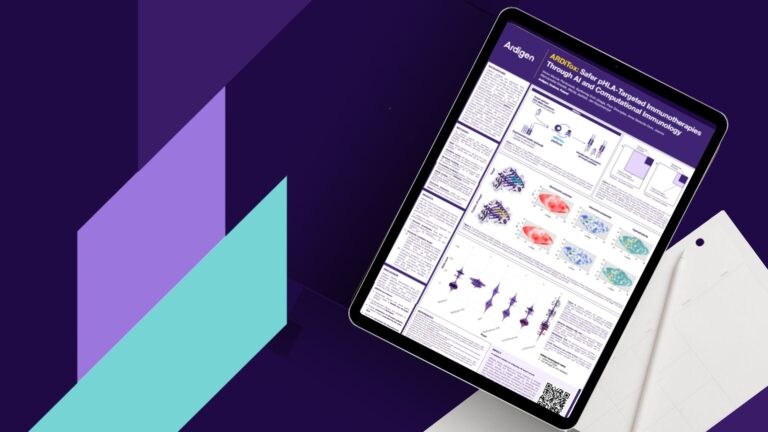
Fig 1. Conceptual illustration of UX design acting as a mediating layer between AI models and data and scientists’ decisions, enabling structured interpretation of complex bioinformatics outputs.
Challenges where UX design can help
Every bioinformatics tool faces similar obstacles. Considering the user’s – both bioinformatician and biologist – perspective early on helps mitigate these challenges.
Data Overwhelm
Omic and phenotypic data are inherently complex. Without a thoughtful data structure, the interface can become a source of frustration: hundreds of raw tables, tens of cohorts or the same information in multiple data products while others being present nowhere. The lack of a clear “where to start?” can prevent even the best AI model from being fully utilized.
Differing User Needs
Bioinformaticians often need full control over raw data and model parameters, biologists need clear visual summaries, and clinicians need transparent recommendations. An interface that fails to account for these perspectives may not meet the expectations of any user group.
Trust in AI Models
Artificial intelligence, especially deep learning, can be opaque. If the interface does not give the researcher insight into *why* the model made a decision and *how* confident it is in the result, it hinders trust-building and limits the tool’s practical application.
These challenges lead to real consequences: lower tool adoption, interpretive errors, and limited utilization of algorithmic potential. This is why UX should be treated as an integral part of the investment in AI, not merely a visual add-on.
Trust and complexity – How explainable AI depends on UX
In our previous article, “Can You Trust Your Model? Why Explainability Matters in AI-Driven Drug Discovery“, we argued that trust is the cornerstone of AI adoption in science. UX Design is the natural extension of that argument. Explainable AI (XAI) doesn’t end with the algorithms – it must be translated into a clear, understandable communication.
It is in this interface where the researcher ultimately decides whether to trust the model. Therefore, UX design must address three fundamental user needs:
Tracing the Reasoning Path
The ability to drill down and see which biomarkers or phenotypic features had the greatest impact on the outcome transforms the model from a “black box” into a transparent tool. It allows a scientist to say, “I understand why the model decided this.”
Intuitive filtering and sorting
Tools that allow for easy data comparison and exploration without writing SQL queries significantly streamline the daily workflow, turning the interface into a lab for experimentation rather than an obstacle course.
Visualization of model confidence
Color gradients, bar charts, or other indicators help researchers assess the credibility of predictions at a glance.
This approach builds trust and increases the effectiveness of using AI tools.
UX principles that can strengthen Human-AI collaboration
Based on our experience, we distinguish several practices that yield the greatest benefits:
- Accounting for different types of expertise – By designing for different users, it’s valuable to offer an “Research Environment” mode with full control and ‘under the hood’ access for data experts and an “Insight Explorer” mode with clear overviews for clinicians.
- Progressive disclosure of complexity – Instead of showing everything at once, guide the user step-by-step: from the big picture to details on demand.
- Consistency and context – Unified visual conventions and flexible interfaces allow users to focus on the science, not on figuring out the tool.
- Supporting collaboration – Bioinformatics is teamwork. Features for sharing and exporting results facilitate dialogue between researchers and accelerate the discovery process.
At Ardigen, we observe that the most effective solutions are born at the intersection of algorithms, data, and human intuition. UX design can be the binding agent that connects these elements.
UX is the bridge that helps innovations move more smoothly from the lab to practice.
An invitation to conversation
Are you wondering how your AI tools could be used more willingly and effectively? We would be happy to discuss how we can collaboratively design interfaces that become genuine support in scientific discoveries.
Author: Martyna Piotrowska
Technical editing: Ardigen expert: Dominika Glanowska