Predicting toxicity with Cell Painting & Dynamic Modeling
About the poster
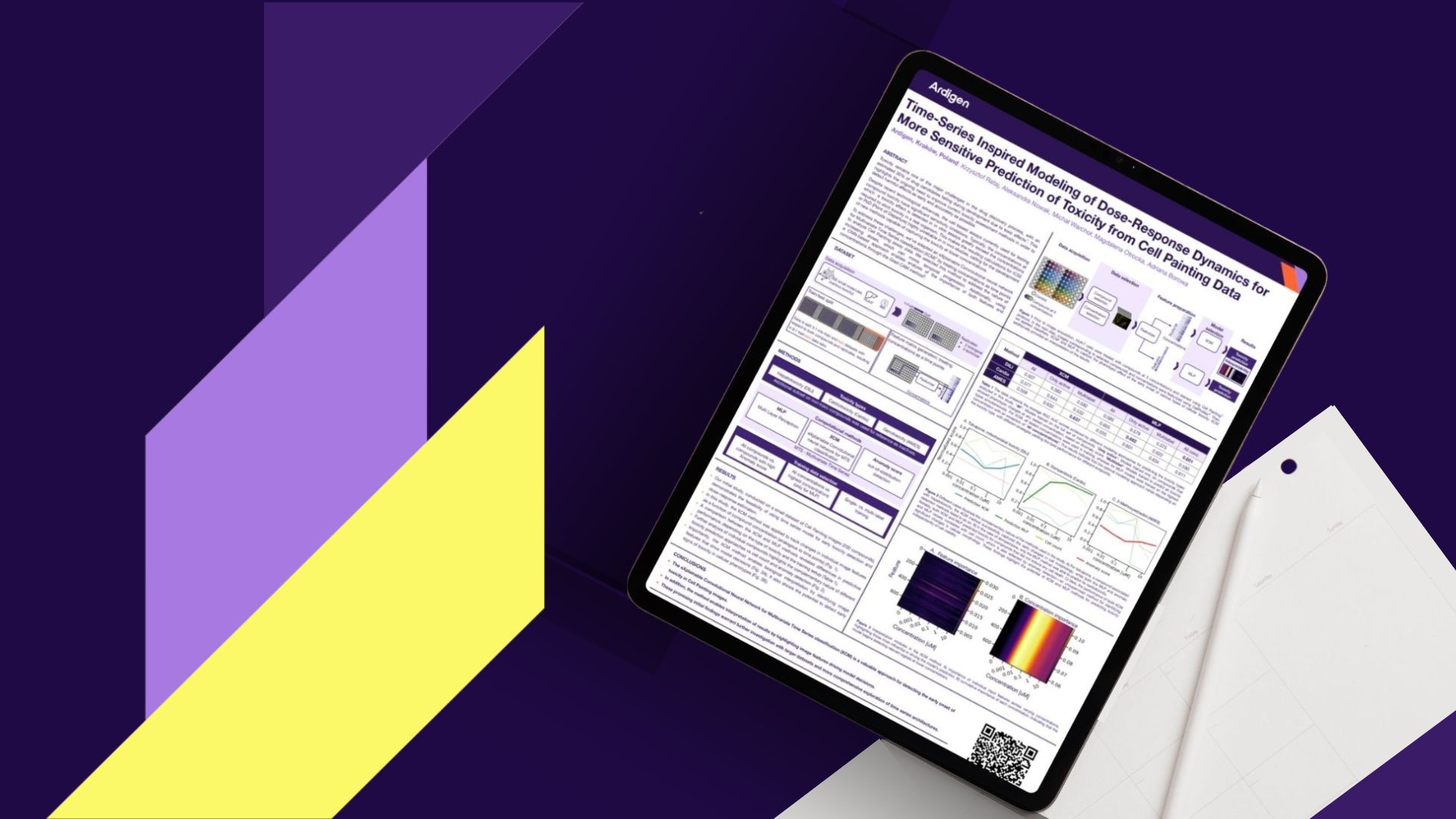
Toxicity remains one of the major challenges in the drug discovery process, with an estimated 30% of drug candidates failing during development due to toxic effects. This highlights the ongoing need to improve current toxicity assessment methods in order to detect harmful effects as early and accurately as possible.
Despite recent technological advances, the cell based assays currently used for testing compound toxicity have significant sensitivity limitations. Typically, the concentrations at which a toxicity effect is detected in in vitro assays greatly exceed the concentrations required to elicit toxicity in a real organism. This makes the resulting calculations for IC50 or PoD (Point of Departure) highly unreliable in in vivo studies, calling for the development of new methods capable of capturing the toxicity at lower concentrations.
To address these challenges, we’ve adapted an eXplainable Convolutional neural network for Multivariate Time Series classification (XCM) by treating concentrations as time points to analyze Cell Painting assay data. We selected this method to address the nature of increasing doses, which can mimic temporal progression. Additionally, using
a CNN-based approach enables analysis of the importance of both features and concentrations through the Grad-CAM method.
This poster was originally presented during the SLAS Europe 2025 Conference.
Expert Contribution
Reviewed by: Dr. Nasim Jamali, PhD
Role: Director of Morphological Profiling, AI‑Driven Drug Discovery
Expertise: Morphological profiling, microscopy imaging, bioimage analysis, AI-driven phenotypic data interpretation, product strategy in biotech