Building and Orchestrating a Multi-Agent System for Drug Discovery.
From Governed Multimodal Data to Program-Tailored Insights
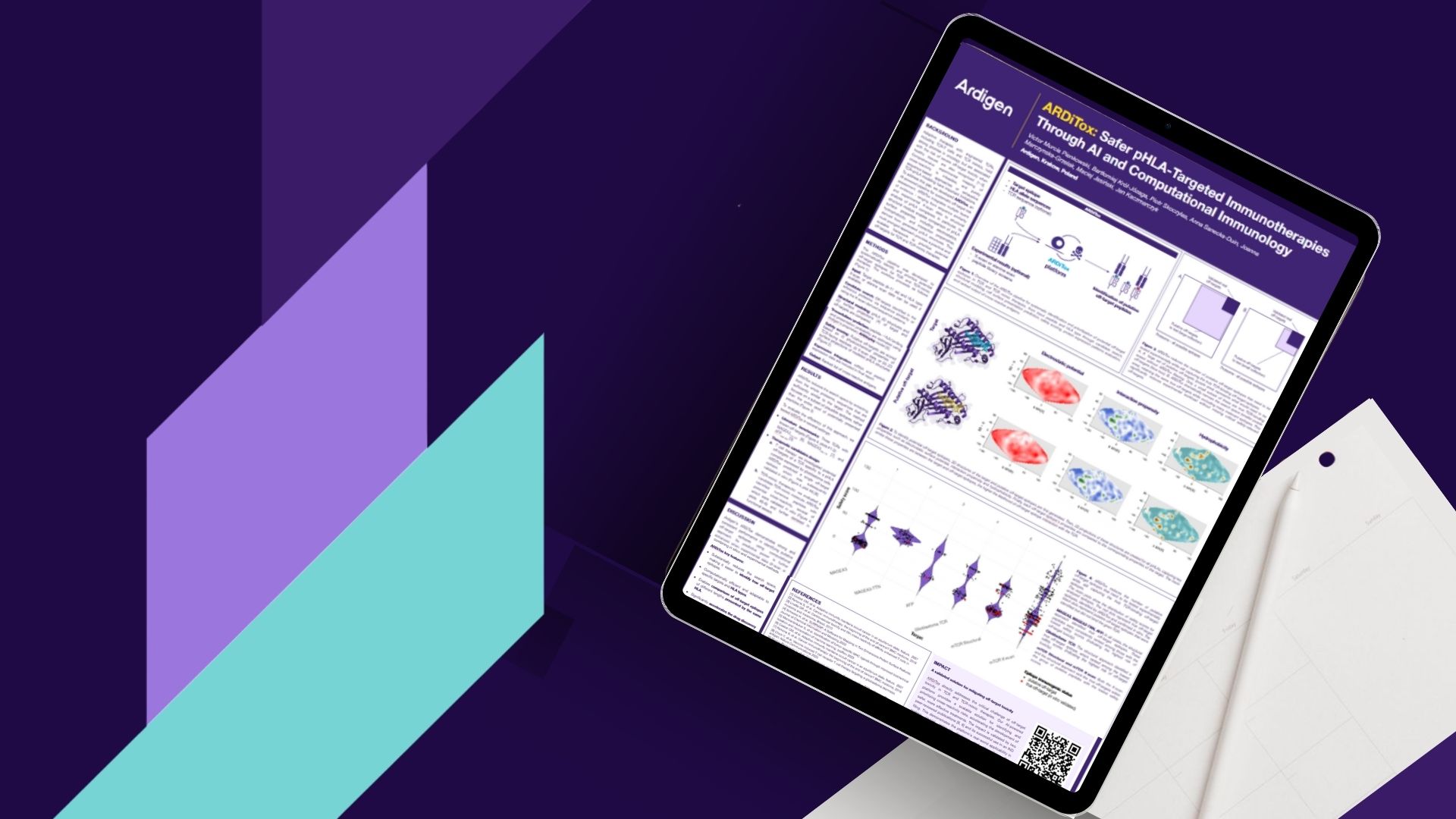
About the poster
Only about 11% of agentic AI systems reach production [7]. The deciding factor is the system around the model. In drug discovery the gap is sharper, because a drug-program question is never one question. Target selection, modality choice and patient segmentation rest on dozens of dependent sub-questions across incompatible data modalities. Single-agent retrieval flattens that structure, and it answers past the evidence as fluently as within it. Fluency is not evidence.
We present a production multi-agent system in which governance sits upstream of reasoning. A Data Universe of versioned data products spans ten multi-omics modality classes, each with a schema, ontology bindings, a quality control (QC) report, a provenance graph and an access policy, kept current by a monitoring agent watching 300+ repositories. An integration layer serves each product over Model Context Protocol (MCP), declaring units, ontologies and uncertainty and returning a provenance token with every result; a knowledge graph docks internal data into public evidence. A supervisor agent decomposes each program question into a directed acyclic graph (DAG) of evidence sub-questions, routed to specialists typed by scientific question.
Every output is gated before acceptance: scored against gold-standard benchmarks, bounded by guardrails, and validated by domain experts. The output is a panel of program insights, core classes per target plus modality-specific sets for ADC, bispecific, cell therapy and mRNA vaccine programs, each carrying an evidence chain, an effect size with uncertainty and an audit trail complete enough to be re-derived.